Key takeaways
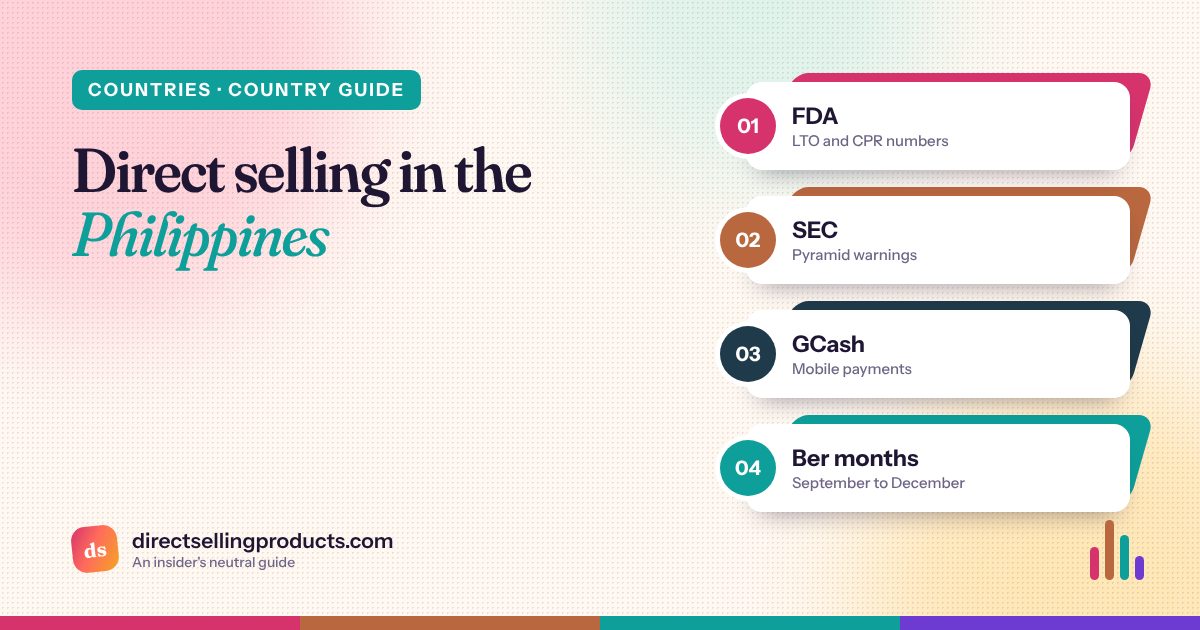
- Check FDA registration for products and SEC / DTI registration for the business.
- Be alert to pyramid schemes presented as investments. The SEC publishes warnings.
- Selling runs on Facebook, Messenger and GCash. Typhoons affect deliveries.
Is direct selling legal in the Philippines?
Yes. Direct selling is a recognised business in the Philippines, but pyramiding schemes, which pay mainly for recruitment or take money from members as an investment, can be treated as illegal. The Securities and Exchange Commission warns about them, and the FDA regulates product registration.
This is general information, not legal advice. Confirm current rules with the agencies named below.
Who to check with
| Body | What to check |
|---|---|
| SEC | Company registration, and any public advisory against the company or scheme |
| DTI | Business name registration; consumer-protection information |
| FDA Philippines | The establishment's licence to operate and the product's certificate of registration or notification |
| BIR | Tax registration, receipts and filing |
How selling differs across the Philippines
Quezon City, Makati, Pasig
Traffic is a daily constraint, so meetings happen near offices or malls and orders arrive by Messenger. Heat and humidity run all year, and flooding during the rainy season (roughly June to November) can halt deliveries for days.
Cebu City, Iloilo
A strong regional identity and Cebuano or Hiligaynon in everyday talk. Selling in the local language builds trust faster. Island logistics add shipping time, and typhoons can disrupt ferries and flights.
Davao City and beyond
A fast-growing city with a more orderly pace and strong community networks. Delivery to outlying provinces can be slow, so manage expectations.
Baguio
The cool highlands change product mix: richer moisturisers and lip care sell here, where they'd be heavy in Manila. Tourism peaks around Holy Week and the Christmas season.
What shapes buying
- Family and remittances. Many families depend on relatives working abroad. Gift sets and personal-care items for "balikbayan" packages sell, and people compare prices carefully.
- The ber months. Christmas shopping begins in September and builds to December, so plan stock for it.
- Payments. GCash and Maya e-wallets, bank transfer and cash on delivery. Couriers vary in reliability, so ask customers which they prefer.
- Social selling. Facebook groups, Messenger and, increasingly, TikTok drive discovery.
- Humid weather. See personal care for hot, humid weather and makeup for humid climates.
Tax and records
If you're self-employed you may need to register with the BIR and issue receipts. Self-employed individuals may be able to choose between ordinary and a flat-rate income tax option up to a turnover limit, and VAT applies above a threshold. Confirm the current options with the BIR or an accountant.
Watch for pyramid schemes dressed as investments
Offers promising high returns for "investing" in a starter package, where most of the money comes from bringing in others, are the pattern the SEC warns about. Apply the pyramid tests and the red flags checklist. If you've been misled, keep your records and report it to the SEC and the DTI.
Frequently asked questions
Is direct selling legal in the Philippines?
Yes, direct selling is a recognised business. But pyramiding schemes that take money from members and pay returns for recruitment can be treated as illegal investment schemes, and the Securities and Exchange Commission regularly warns the public about them. Check any company's registration before joining.
Do direct selling products need FDA approval in the Philippines?
Food supplements and cosmetics are regulated by the Philippine FDA. Look for the establishment's licence to operate and the product's registration or notification number, and verify them with the FDA. Requirements vary by product type and change over time.
What are the ber months?
The months from September to December, which end in "-ber" in English. Filipinos begin Christmas preparations early, so gifting and personal-care sets sell strongly from September onward.
Sources
- Food and Drug Administration, Philippines. www.fda.gov.ph
- Department of Trade and Industry, Philippines. www.dti.gov.ph
- Securities and Exchange Commission, Philippines. www.sec.gov.ph
- Bureau of Internal Revenue, Philippines. www.bir.gov.ph