Key takeaways
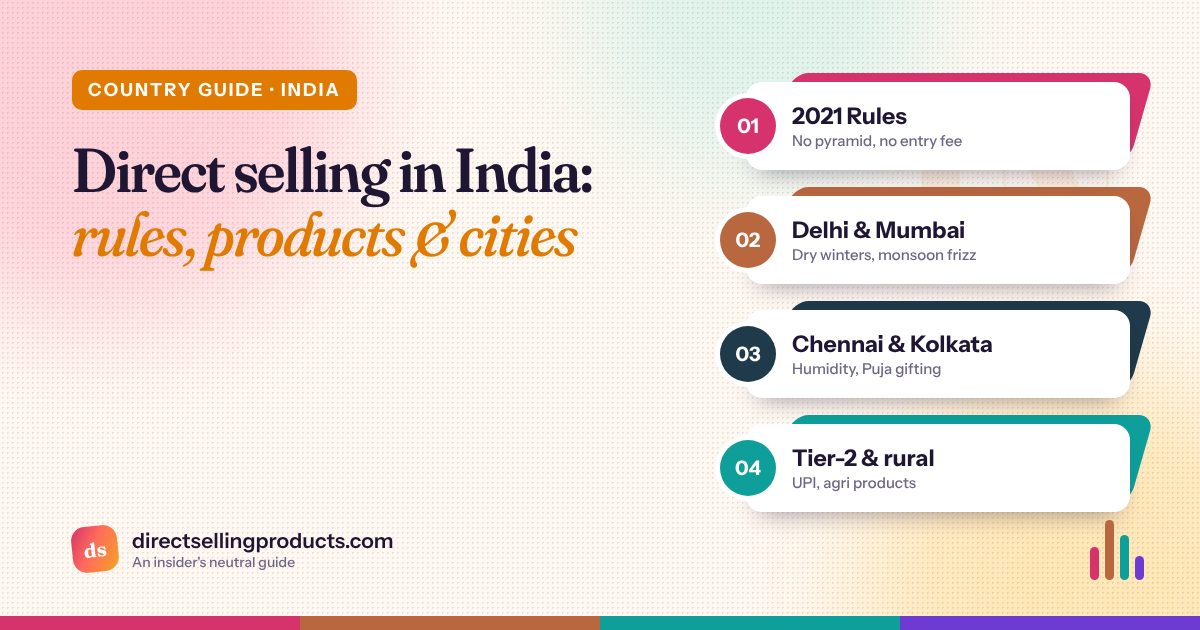
- Direct selling is legal and regulated in India under the 2021 rules. Pyramid and money-circulation schemes are banned.
- No entry fee should be required, and unsold saleable stock should be eligible for buy-back.
- Wellness, personal care and home care dominate. Demand shifts with season and region.
- Commission is usually taxed through TDS under Section 194H. Keep your statements.
Is direct selling legal in India?
Yes. Direct selling is legal in India and is regulated by the Consumer Protection (Direct Selling) Rules, 2021, notified under the Consumer Protection Act, 2019. The rules ban pyramid schemes and money circulation schemes, and require companies to keep a registered office in India and a working grievance redressal mechanism.
What the 2021 rules mean for you as a seller or buyer
| Area | What to expect from a compliant company | How to check in 5 minutes |
|---|---|---|
| Structure | No pyramid scheme or money circulation | Is income tied to product sales, not joining? |
| Office | Registered office in India | Address on the website footer and invoices |
| Complaints | Grievance officer and redressal process | Named officer with contact details |
| Joining | No mandatory entry or registration fee | Can you register without buying? |
| Returns | Buy-back for unsold, saleable stock | Written policy with a time window |
| Claims | No false or misleading product or income claims | Compare team posts with official literature |
Older laws still apply alongside the rules. The Prize Chits and Money Circulation Schemes (Banning) Act, 1978 is the one used against schemes that pay mainly for recruitment. The 2021 rules, clause by clause →
What sells in India, and why
Across the country, four categories carry most of the volume: wellness and nutrition, personal care, skincare and cosmetics, and home care. Ayurvedic and herbal positioning is common, partly because it matches what customers already trust from their grandmothers' kitchens. Agricultural inputs like plant-growth products and soil conditioners have become a real category in farming districts.
What changes from place to place is the reason people buy. That's the part a generic guide misses.
How direct selling looks city by city
Dry winters, bad-air months
Several large direct selling companies have head offices in Delhi and Gurugram, so training events are frequent. From November, when the AQI climbs and the air turns dry, demand for moisturisers, lip care and immunity-positioned supplements rises. A lot of meetings still happen in community halls in residential colonies across Rohini, Dwarka and East Delhi.
Society groups and monsoon frizz
Long commutes on the local trains mean customers browse WhatsApp catalogues on the way home and order for weekend delivery. Housing societies in Thane, Borivali and Navi Mumbai often have rules about selling within the premises, so ask the secretary first. From June to September, anti-frizz hair care and anti-fungal personal care move faster.
Ingredient-literate buyers
Tech professionals in Whitefield, Koramangala and HSR Layout read labels and compare online. They respond to ingredient lists and cost-per-use maths more than to lifestyle pitches. Instagram and LinkedIn do more work here than door-to-door visits, and protein and nutrition products sell to gym-goers.
Humidity and hair-oil loyalty
Year-round humidity makes heavy creams hard to sell, while light gels, sunscreen and talc-free body care do better. Customers with a coconut-oil hair routine passed down for generations need a real reason to switch. Demos in Tamil, in the customer's home, still beat any brochure.
Puja-season gifting
Gift packs and festive bundles move in the weeks before Durga Puja, earlier than in the rest of India, where Diwali drives the peak. Neighbourhood networks in Salt Lake and South Kolkata run on trust built over years, so service after the sale matters more than the first pitch.
Indore, Lucknow, Jaipur, Nagpur, Patna
Much of the recent growth is here. Many sellers are homemakers or small-shop owners adding a side income, and many buyers pay by UPI or cash on delivery. In farming belts around Indore and Nagpur, agri products are sold field to field, and results visible at harvest do the selling.
India's selling calendar: climate and festivals
When demand shifts during the year. Approximate; festival dates follow the lunar calendar and move each year.
- Climate season
- Festive & social season
How Indian customers actually buy
- WhatsApp first. A product photo, price and voice note to a known contact converts better than any post.
- UPI for payment. Instant and traceable. Cash on delivery is still common in smaller towns.
- Festive and wedding calendars. Diwali, Durga Puja, Pongal and the November–February wedding season drive gift-pack sales.
- Family approval. Supplement purchases are often a household decision, so explain to the person who'll take it, and to whoever pays.
Tax basics for Indian direct sellers
Commission is income. Companies usually deduct TDS under Section 194H, and you report the commission in your income tax return. If your sales turnover crosses the GST registration threshold, registration may apply. Rules and thresholds change, so confirm with a chartered accountant. Detailed tax guide →
Frequently asked questions
Do I need to pay a joining fee to become a direct seller in India?
No. Under the 2021 rules, a direct selling entity should not require a direct seller to pay an entry or registration fee. Buying a starter kit or products should be optional, and unsold saleable stock should be covered by a buy-back policy.
Which direct selling products sell best in India?
Wellness and nutrition supplements, personal care, skincare and home care are the largest categories, with Ayurvedic and herbal positioning especially common. Agricultural inputs have also grown in rural markets. Demand shifts with the season: skincare for dry North Indian winters, and immunity products when air quality drops.
Is tax deducted on direct selling commission in India?
Usually yes. Companies typically deduct TDS on commission income under Section 194H of the Income Tax Act, and the commission must be declared in your income tax return. If your turnover crosses the GST threshold, GST registration may apply. Confirm your situation with a chartered accountant.
How do I check if a company is registered in India?
Look for a registered office address, a CIN on invoices and the website, a named grievance officer, and a written buy-back policy. Then search the Ministry of Corporate Affairs records using the company name. Step-by-step check →
Sources
- Department of Consumer Affairs: Consumer Protection (Direct Selling) Rules, 2021. consumeraffairs.nic.in
- Ministry of Corporate Affairs company search. mca.gov.in
- Income Tax Department, Section 194H. incometax.gov.in
- FSSAI licence verification. fssai.gov.in