Key takeaways
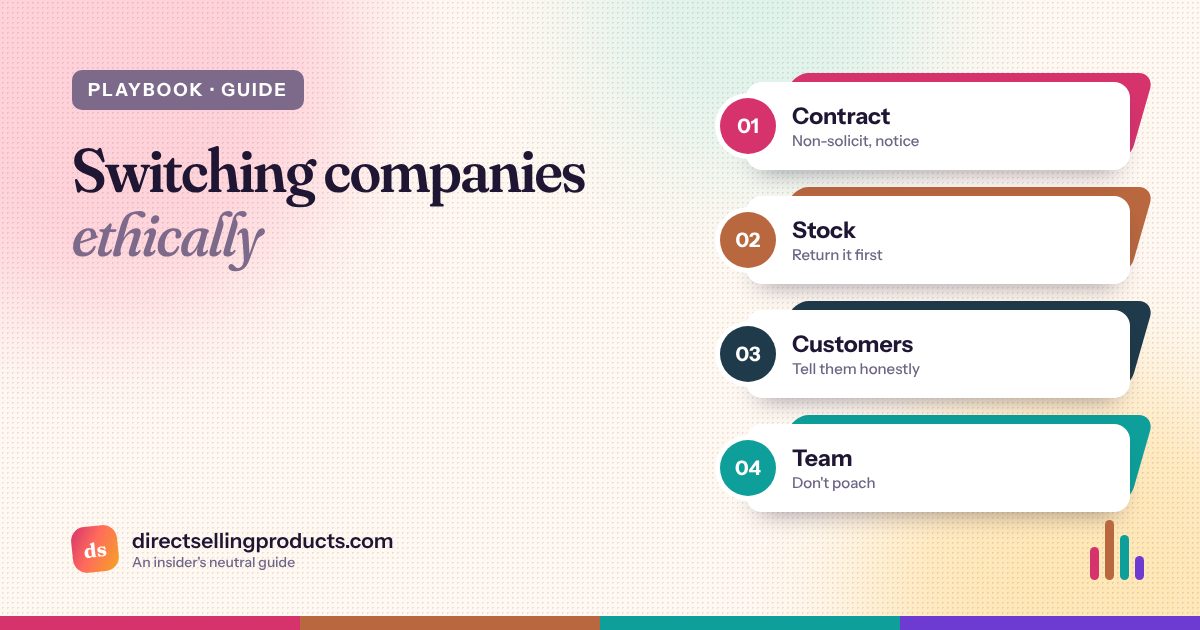
- Read your contract first: notice, non-solicit and refund clauses.
- Return stock before you resign, using the written buy-back policy.
- Be honest with customers, and don't use the old company's data.
How do you switch direct selling companies ethically?
To switch direct selling companies ethically, read your current contract for notice and non-solicit clauses, claim any buy-back refund before resigning, finish your obligations to customers, don't use the old company's data or pressure your team to follow, be honest about why you moved, and compare the new company properly first.
1. Be sure why you're moving
Write down the reasons. Better products? Costs too high? A plan that fits you? Compare facts, not promises, using the comparison method.
2. Read your current contract
| Clause | What it can restrict |
|---|---|
| Notice period | How and when you can resign |
| Non-solicit | Approaching customers or team members for a period after leaving |
| Non-compete | Joining a competitor, and enforceability varies by country and clause |
| Confidential information | Use of customer lists, contact data and training material |
| Refund and buy-back | What happens to unsold stock, and when to claim |
If a clause is unclear or unusually strict, ask a lawyer. These terms vary by company and country.
3. Claim your refund first
Request the buy-back in writing before you resign, because some policies cover only current members. Keep invoices and the company's reply. How to read the policy →
4. Look after your customers
- Finish open orders and honour returns under the old company's policy.
- If you plan to offer different products, say so openly and let customers choose.
- Don't badmouth the old company. Stick to facts about your own reasons.
5. Treat your team fairly
- Don't recruit them to the new company if your contract restricts it.
- Don't use the company's contact lists or back-office data.
- If someone asks, answer honestly, and encourage them to compare the facts.
6. Start the new one the right way
- Run the 25 questions before you pay anything.
- Start small, and don't make a big purchase to catch up on a rank.
- Disclose your history if asked. Don't make claims about the old company you can't back up.
Mistakes to avoid
- Resigning before claiming a refund.
- Taking contact lists you aren't allowed to use.
- Trashing your old company or your old upline in public.
- Joining the new company in a rush because of a bonus deadline.
Your history with each company is part of your reputation. For the full disclosure on this site's author, see the disclosure page.
Frequently asked questions
Can I take my customers with me to a new company?
It depends on your contract and local law. Some agreements restrict soliciting customers or team members for a period after you leave. Read yours, and be honest with customers about why you're offering something different.
What should I do with unsold stock when leaving?
Check the buy-back policy and request a refund before you resign, since some policies need you to still be a member. Keep records of the request.
Is it unethical to recruit my old team into the new company?
Contacting your former team to move them can breach non-solicit terms and damage trust. Don't use company data or pressure people. If someone asks you about your new company, answer honestly.
Sources
- U.S. FTC Consumer Advice: Multi-Level Marketing Businesses and Pyramid Schemes. consumer.ftc.gov
- Department of Consumer Affairs, India: Consumer Protection (Direct Selling) Rules, 2021. consumeraffairs.nic.in